Barium Sulphate Supply Chain: How to Avoid Common Procurement Mistakes
Barium Sulphate Supply Chain: How to Avoid Common Procurement Mistakes
Introduction
Barium sulphate procurement failures rarely stem from a single bad batch. They come from a chain of small oversights — unclear specifications, unverified suppliers, and logistics blind spots that compound into costly production stoppages. The barium sulphate supply chain spans mining, chemical precipitation, surface modification, packaging, and international freight, and each link introduces risk. This article walks procurement managers, paint formulators, and plastics compounders through the most common mistakes and how to avoid them, step by step. You will learn how to qualify suppliers, set enforceable specifications, manage lead times, and build a resilient purchasing strategy. By the end, you will have a practical checklist to protect your production line from supply chain surprises.
One-line answer: Avoid barium sulphate procurement mistakes by verifying supplier certifications, locking down particle size and purity specs in writing, auditing quality control processes, and planning inventory around real lead times instead of assuming all suppliers deliver the same.
Key Takeaways
- Verify supplier certifications and on-site quality control before committing to long-term contracts.
- Specify particle size distribution, whiteness, and purity numerically — never rely on verbal assurances.
- Audit batch-to-batch consistency with retained samples and third-party lab testing.
- Factor real lead times, minimum order quantities, and freight costs into inventory planning.
- Diversify sources across at least two qualified suppliers to mitigate regional disruption risks.
What You Need Before Starting
Before you evaluate any barium sulphate supplier, gather your own baseline data. You need:
- Your application’s exact specification sheet: whiteness (ISO brightness), particle size D50 and D97, oil absorption, pH, and purity percentage.
- A list of applicable industry standards your end product must meet (for example, ISO 3262 for extenders, or customer-specific paint and plastics norms).
- Your annual consumption volume and forecast, broken down by grade.
- A clear understanding of your logistics: port of entry, Incoterms preference, and storage capacity.
Having these numbers ready prevents the most common mistake of all: comparing quotes without comparing specifications. A lower price per ton means nothing if the particle size distribution does not match your dispersion equipment. For coatings, paints, plastics, inks, masterbatch, paper making, and rubber applications, the specification sheet is your first filter. Our products can be widely used in coatings, paints, plastic and other fields, and suppliers who understand these applications will ask about your process before quoting.
Step 1 — Qualify Suppliers on Paper Before You Qualify Them on Price
What to Do
- Request a full technical data sheet (TDS) and safety data sheet (SDS) from every candidate supplier.
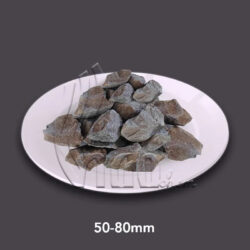
- Ask for the production process description: is the material natural (ground barite) or precipitated (synthetic)?
- Verify the supplier’s export experience — customs documentation, packaging standards, and container loading procedures.
- Check certifications: ISO 9001 for quality management, and any industry-specific accreditations relevant to your market.
Why This Matters
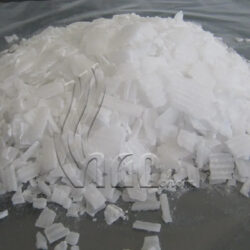
Precipitated barium sulphate, produced via advanced chemical precipitation, offers low mechanical admixture, uniform fineness, and high purity — typically ≥98%. Natural barium sulphate, ground from barite ore, has different particle shapes and brightness levels. If your application demands high gloss or tight particle size control, you need the precipitated grade. If you are filling a matte coating, natural might suffice at a lower cost. Mixing these up at the qualification stage creates problems that no amount of downstream adjustment can fix.
Common Mistakes to Avoid
- Skipping the process audit: A supplier who cannot describe their precipitation or surface modification process in detail probably does not control it well.
- Ignoring the difference between natural and precipitated: These are not interchangeable commodities. The price gap exists for a reason.
- Accepting a single certificate as proof of quality: A certificate from last year does not guarantee this year’s production consistency.
Step 2 — Lock Down Specifications in Writing, Not in Conversation
What to Do
- Write your specification into the purchase order: purity (≥98%), whiteness (ISO brightness R457), particle size D50 and D97, oil absorption, and moisture content.
- Define the test methods for each parameter. ISO 3262-4 covers precipitated barium sulphate for paints and plastics; your lab or a third party should follow these methods.
- Set acceptable tolerance ranges. A D50 of 0.7 µm with a tolerance of ±0.1 µm is a different product from ±0.3 µm.
- Require a certificate of analysis (CoA) with every shipment, and spot-check with independent lab testing.
Why This Matters
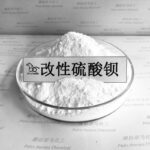
Barium sulphate grades differ dramatically. Nano barium sulphate has a narrow particle size distribution and small specific surface area, making it suitable for high-performance coatings. High gloss barium sulphate is selected from high-grade raw materials for applications where surface finish matters. Modified precipitated barium sulphate uses surface treatment technology for better dispersibility and fluidity. If your purchase order only says “barium sulphate,” you leave the door open for the supplier to ship whatever grade is cheapest for them. Relevant specifications and application guidance are available through Modified Precipitate Barium Sulphate.
Common Mistakes to Avoid
- Relying on verbal agreements: Sales representatives change jobs. Written specifications survive personnel changes.
- Not defining test methods: Two labs can measure the same powder and get different results if they use different methods.
- Ignoring surface treatment: Untreated and surface-modified grades behave differently in dispersion. Specify which one you need.
Step 3 — Audit Quality Control and Batch Consistency
What to Do
- Ask for batch-to-batch test records covering at least the last 12 months.
- Request retained samples from previous shipments and compare them against current deliveries.
- Visit the production facility if volume justifies it, or request a video audit of the quality control lab.
- Establish a non-conformance procedure: what happens when a batch fails your incoming inspection?
Why This Matters
A supplier with robust quality control delivers consistent whiteness, particle size, and purity. Langfang Pairs Horses Chemical Co., Ltd., established in 1997, is one of the companies in Langfang City that can detect and export chemical products — a reminder that detection capability is not universal among Chinese pigment producers. Your supplier should have similar in-house testing capability, not just a certificate from a third party they hired once.
Common Mistakes to Avoid
- Accepting one good batch as proof of consistency: Ask for distribution charts, not just averages.
- Skipping incoming inspection: A 30-minute test at your dock saves weeks of production rework later.
- Not keeping retained samples: When a customer complaint arrives, you need evidence of what you actually received.
Step 4 — Plan Inventory Around Real Lead Times, Not Optimistic Ones
What to Do
- Ask for the supplier’s current production lead time, not their theoretical capacity.
- Add 2–3 weeks of buffer for international freight, customs clearance, and port congestion.
- Calculate your safety stock based on your consumption rate and the supplier’s minimum order quantity.
- Review your inventory policy quarterly, not annually.
Why This Matters
A typical sea freight shipment from China to Europe or North America takes 30–45 days. Production might take 7–14 days. Customs adds variability. If your procurement plan assumes 4 weeks total and reality delivers 8, your production line stops. The cost of a stoppage — idle labor, missed delivery dates, customer penalties — far exceeds the cost of carrying extra inventory.
Common Mistakes to Avoid
- Trusting the supplier’s “we can ship immediately” claim: Verify with a trial order before committing to a schedule.
- Ignoring seasonal freight spikes: Container rates and space availability fluctuate. Plan around peak seasons.
- Not accounting for minimum order quantities: A supplier’s MOQ might be 20 metric tons. If your monthly consumption is 5 tons, you need 4 months of storage space.
Step 5 — Diversify Your Supplier Base
What to Do
- Qualify at least two suppliers for your critical grades.
- Allocate volume unevenly — for example, 70/30 — to keep both relationships active.
- Test the second supplier’s material in your process before you need it.
- Review supplier performance quarterly: on-time delivery, quality conformance, and responsiveness.
Why This Matters
Single-source dependency is the riskiest position in any supply chain. A production issue, a raw material shortage, or a trade policy change at your sole supplier stops your line. A second qualified source gives you leverage in negotiations and a fallback when the unexpected happens. The cost of qualifying a second supplier is small compared to the cost of an unplanned shutdown.
Common Mistakes to Avoid
- Waiting for a crisis to qualify a backup: Qualification takes weeks. By then, the crisis is over and you paid emergency prices.
- Choosing a backup solely on price: The backup must meet the same specifications, not just a lower price point.
- Not testing the backup in your process: A material that looks identical on paper can behave differently in your dispersion equipment.
Step 6 — Build a Long-Term Partnership With Transparent Communication
What to Do
- Share your forecast with the supplier — even rough numbers help them plan raw material procurement.
- Establish a single point of contact on both sides for issue resolution.
- Schedule regular business reviews: quarterly for quality metrics, annually for commercial terms.
- Visit the supplier’s facility at least once every two years, or more often for critical grades.
Why This Matters
Suppliers who understand your business can offer better solutions. For example, Precipitated Barium Sulphate with ≥98% purity and uniform fineness works well in applications requiring high opacity and chemical inertness. Modified Precipitate Barium Sulphate offers improved dispersibility and fluidity through surface treatment. A supplier who knows your application can recommend the right grade — and flag potential issues before they become problems.
Common Mistakes to Avoid
- Treating procurement as a purely transactional exercise: The lowest price per ton often costs more in total when you factor in quality issues and poor communication.
- Not sharing forecast data: Suppliers cannot plan production for demand they cannot see.
- Ignoring early warning signs: A supplier who misses a delivery date by a week today will miss it by a month next year.
Pro Tips for Success
- Request a pre-shipment inspection for every container: A third-party inspector checks quantity, packaging, and basic quality parameters before the container leaves the port. This costs a few hundred dollars and prevents expensive surprises.
- Standardize your incoming test protocol: Define exactly what you test, how you sample, and what your acceptance criteria are. Train your receiving team on the procedure.
- Negotiate quality clauses into your contract: Include penalties for non-conforming material and a clear replacement procedure. This protects you without making the relationship adversarial.
- Track your supplier’s raw material sources: Barium sulphate production depends on barite ore and sulfuric acid availability. A supplier who sources raw materials from multiple regions is more resilient than one dependent on a single mine.
- Consider total cost of ownership, not unit price: Factor in freight, customs duties, inventory carrying cost, and quality failure cost. The cheapest supplier is rarely the cheapest overall.
Frequently Asked Questions
What is the difference between precipitated and natural barium sulphate?
Precipitated barium sulphate is produced through a chemical precipitation process, resulting in uniform fineness, low mechanical admixture, and high purity — typically ≥98%. Natural barium sulphate is ground from barite ore and has broader particle size distribution. Precipitated grades offer better consistency for high-performance applications like coatings and plastics.
How do I verify a barium sulphate supplier’s quality claims?
Request a certificate of analysis with every shipment, audit their quality control lab, and spot-check with independent third-party testing. Ask for batch-to-batch consistency data covering at least 12 months. If possible, visit the facility or request a video audit of their testing procedures.
What whiteness value should I specify for barium sulphate?
Whiteness is typically measured as ISO brightness (R457). Values above 90% are common for paint and coating applications, while higher grades for high-gloss applications may exceed 95%. Specify the exact value and test method in your purchase order, and verify with incoming inspection.
How much safety stock should I carry for barium sulphate?
Calculate based on your consumption rate, supplier lead time, and freight variability. A common rule of thumb is to carry 4–8 weeks of inventory, depending on your order cycle and the criticality of the material. Review this quarterly and adjust based on actual delivery performance.
Can I use the same barium sulphate grade for paints and plastics?
Not necessarily. Paint applications often prioritize whiteness and dispersion, while plastics applications may require specific particle size for mechanical properties and surface finish. Work with your supplier to select the right grade for each application, and verify with trial batches before committing to volume.
Conclusion
Barium sulphate supply chain mistakes are avoidable when you approach procurement systematically. Start with clear specifications, verify supplier quality control, plan inventory around realistic lead times, and diversify your sources. The cost of qualification — time, testing, and audits — is a fraction of the cost of a production stoppage or a customer rejection. Apply these six steps to your next procurement cycle, and you will see fewer surprises and more predictable outcomes. Begin by auditing your current supplier against the criteria in this article, then close any gaps you find. Your production line depends on the quality of the powder you receive, and that quality starts with how you buy.