Durability Requirements for EMF Protection Bedding
Durability Requirements for EMF Protection Bedding
Introduction
EMF protection bedding fails silently. A shield that blocks 99% of radiation on day one can drop to 60% after a few wash cycles, and most buyers never notice until it’s too late. The problem is that durability requirements for EMF protection bedding are rarely spelled out by suppliers, leaving procurement teams to guess between silver-coated fabrics that oxidize and stainless steel blends that hold up for years.
Traditional textile testing focuses on tensile strength and abrasion resistance. Those matter, but they don’t tell you whether the conductive grid inside the fabric remains intact after repeated laundering, folding, and body weight compression. This tutorial walks you through the specific durability criteria you should demand from any EMF bedding supplier, how to test them, and what standards to reference. It’s written for procurement managers, product developers, and quality engineers who need practical verification methods, not marketing claims.
Key Takeaways
- Shielding effectiveness must be tested after laundering, not just on virgin fabric, to reflect real-world use.
- Stainless steel fiber blends outperform silver-coated fabrics for wash durability and oxidation resistance.
- Request test reports per ASTM or IEC standards with attenuation values in decibels (dB).
- Verify seam and edge construction, since gaps in shielding reduce overall performance.
- Demand documented quality control procedures from your supplier before committing to bulk orders.
What You Need Before Starting
Before you evaluate any EMF protection bedding, gather these essentials:
- A clear specification sheet listing target shielding effectiveness in decibels (dB) across frequencies from 30 MHz to 6 GHz.
- Access to a third-party testing lab that can perform shielding effectiveness tests per ASTM D4935 or IEC 62368-1.
- A sample set of at least five fabric swatches from your supplier, including finished bedding products, not just raw fabric rolls.
- Knowledge of your end-user environment: home use, medical facilities, or industrial settings each demand different durability thresholds.
- A checklist for wash testing that mirrors your customer’s actual laundering habits, including detergent type and drying method.
For sourcing, you’ll want a manufacturer that offers both Labor Protection textiles and residential bedding lines, since industrial-grade durability standards often exceed consumer expectations.
Step 1 — Define Shielding Performance Targets
What to Do
Start by writing down the minimum attenuation your bedding must achieve. Industry practice typically references shielding effectiveness in decibels, where 20 dB equals 99% attenuation and 30 dB equals 99.9%. For residential sleep protection, most buyers expect at least 20 dB across the 30 MHz to 1 GHz range, which covers common household sources like Wi-Fi routers and mobile phones.
- Specify the frequency range that matters for your application. Wi-Fi operates around 2.4 GHz and 5 GHz, while cellular signals range from 700 MHz to 3.5 GHz.
- Set a minimum dB threshold for each frequency band. A single number across all frequencies is insufficient because fabric performance varies by frequency.
- Document whether the target applies to new fabric or after a defined number of wash cycles. This distinction is critical for durability assessment.
Why This Matters
A shielding effectiveness number without a frequency range is meaningless. A fabric that blocks 30 dB at 100 MHz might only block 8 dB at 2.4 GHz. When you define targets upfront, you create a benchmark that both you and your supplier can test against. This also prevents disputes later when a product underperforms in the field.
Common Mistakes to Avoid
- Accepting a single dB figure: Always request a frequency-dependent curve or at minimum, values at 100 MHz, 1 GHz, and 2.4 GHz.
- Ignoring wash cycle requirements: Shielding effectiveness on new fabric tells you nothing about durability. Demand post-wash testing.
- Confusing shielding with absorption: Some suppliers claim “absorption” properties that don’t translate to measurable attenuation. Stick to dB values.
Step 2 — Evaluate Fiber and Fabric Construction
What to Do
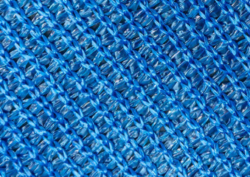
Examine the conductive material and how it’s integrated into the fabric. Two main approaches dominate the market: silver-coated fabrics and stainless steel fiber blends. Silver coatings provide excellent initial conductivity but degrade with oxidation and washing. Stainless steel fibers, typically 8 to 12 microns in diameter, are blended with cotton or polyester at ratios around 20% to 30% by weight.
- Request the fiber composition percentage and the base material blend from your supplier.
- Ask for a cross-section analysis or documentation showing how conductive fibers are distributed through the yarn.
- Verify that the conductive fibers run continuously through the fabric rather than being applied as a surface coating.
Why This Matters
Surface-coated fabrics lose conductivity as the coating wears off. Stainless steel fibers, by contrast, maintain their conductive path even as the surrounding textile degrades. For bedding that gets washed weekly, this difference translates into years of additional service life. Stainless steel also resists oxidation, so the fabric won’t develop non-conductive patches over time.
Common Mistakes to Avoid
- Choosing silver for initial performance: Silver-coated fabrics often test higher on day one but degrade faster. Compare post-wash data, not just initial values.
- Overlooking fiber diameter: Thicker stainless steel fibers are more durable but can feel stiff. Balance comfort against durability based on your market.
- Ignoring the blend ratio: Too little conductive fiber means inconsistent shielding. Below 15% by weight, performance becomes unreliable.
Step 3 — Conduct Wash Durability Testing
What to Do
Wash testing is the single most important durability requirement for EMF protection bedding. Bedding gets laundered more frequently than clothing, often weekly, and each cycle stresses the conductive network. Set up a test protocol that mirrors real usage.
- Wash samples at 40°C (104°F) with standard detergent for at least 50 cycles, which approximates one year of weekly washing.
- Test shielding effectiveness at baseline, then after 10, 25, and 50 wash cycles.
- Air dry or tumble dry according to the product label, and record which method you used.
- Measure both shielding effectiveness and physical integrity, including seam strength and fabric tearing resistance.
Why This Matters
The durability requirements for EMF protection bedding are defined by how the product performs after real-world use. A fabric that loses 10 dB after 50 washes may still meet your threshold, but one that loses 20 dB will not. Wash testing also reveals construction flaws, such as conductive fibers breaking at seams or edges, that wouldn’t appear in virgin fabric tests.
Common Mistakes to Avoid
- Testing only raw fabric: Finished bedding includes seams, zippers, and hems that create shielding gaps. Test the complete product.
- Using harsh industrial wash conditions: Unless your customers use industrial laundering, test with household machines and detergents.
- Skipping intermediate measurements: Testing only at baseline and 50 cycles hides when degradation occurs. Intermediate points help you understand failure modes.
Step 4 — Verify Physical and Mechanical Durability
What to Do
Beyond shielding performance, the bedding must survive physical stress. This includes tensile strength, tear resistance, and abrasion resistance. Reference standards like ASTM D5034 for breaking strength and ASTM D2261 for tearing strength. For bedding, also consider pilling resistance per ASTM D4970 and seam slippage per ASTM D434.
- Request test reports for tensile and tear strength from your supplier or an independent lab.
- Perform a simple abrasion test by rubbing the fabric surface with a standard abradant for 10,000 cycles and checking for conductive fiber breakage.
- Inspect seam construction. Overlocked or flat-felled seams that capture conductive fibers without cutting them perform better than simple straight stitches.
- Test folding endurance by repeatedly folding the fabric along the same line and measuring shielding effectiveness afterward.
Why This Matters
EMF protection bedding undergoes constant mechanical stress. Body weight compresses the fabric nightly, and folding during storage creates stress points. If conductive fibers break under these conditions, shielding effectiveness drops even without washing. Physical durability testing catches these failure modes before your customers do.
Common Mistakes to Avoid
- Assuming fabric strength equals shielding durability: A fabric can remain physically intact while its conductive network fractures internally.
- Ignoring seam performance: The shielding effectiveness of a finished product is only as good as its weakest point, and seams are typically the weakest.
- Skipping compression testing: Bedding is compressed for 8 hours nightly. Test shielding after simulated body-weight compression to verify recovery.
Step 5 — Assess Environmental and Chemical Resistance
What to Do
EMF protection bedding faces more than washing. Body sweat, skin oils, and humidity all affect conductive materials. For stainless steel fiber blends, these factors are less concerning, but silver-coated fabrics can degrade rapidly. Test accordingly.
- Expose samples to elevated humidity (85% relative humidity at 40°C) for 48 hours and measure shielding effectiveness before and after.
- Test resistance to synthetic sweat per ISO 105-E04 to simulate prolonged skin contact.
- Verify that any finishing chemicals, such as flame retardants or softeners, don’t interfere with conductivity.
- For products marketed for medical use, confirm compliance with relevant biocompatibility standards like ISO 10993.
Why This Matters
The durability requirements for EMF protection bedding extend beyond washing to the full range of environmental stressors. A product that fails under humidity or sweat exposure will disappoint users within months. Stainless steel fiber blends inherently resist these conditions, which is why they dominate industrial applications like Personal Protection gear where reliability is non-negotiable.
Common Mistakes to Avoid
- Testing only dry conditions: Real bedding is used in humid environments with direct skin contact.
- Assuming all conductive fabrics react the same: Silver and stainless steel have very different environmental resistance profiles.
- Overlooking finishing chemicals: Post-treatment processes can degrade conductivity even if the base fabric is sound.
Step 6 — Establish Quality Control and Documentation
What to Do
Durability is only as reliable as the quality control that maintains it. Your supplier should have documented procedures for testing every production batch, not just prototypes. Ask for their QC protocols and certification history.
- Request batch-level test certificates showing shielding effectiveness for each production run.
- Verify that the supplier’s QC lab is calibrated and that test methods follow recognized standards like ASTM D4935 or IEC 62368-1.
- Ask about their incoming material inspection for conductive fibers, including diameter consistency and purity.
- Confirm traceability from raw material to finished product so you can identify the source of any future failures.
Why This Matters
A supplier’s quality control determines whether the durability you verified in samples carries through to production units. Without batch-level testing, you risk receiving fabric that meets specifications on paper but fails in practice. This is especially important for products used in sensitive applications like Home Appliance EMF Protection environments where consistent performance is expected.
Common Mistakes to Avoid
- Accepting a single test report: One test covers one batch. Demand ongoing verification.
- Skipping third-party audits: In-house testing can be biased or inconsistent. Independent verification adds credibility.
- Ignoring raw material traceability: If conductive fiber quality varies between suppliers, your finished product will too.
Pro Tips for Success
- Request a comparison of shielding effectiveness before and after 50 wash cycles in writing. This single data point tells you more than any marketing brochure.
- Ask your supplier whether they offer blended fabrics with stainless steel fibers in the 20% to 30% range by weight. These typically provide the best balance of durability and comfort.
- Specify a minimum of 20 dB attenuation at 2.4 GHz after 50 washes for residential bedding. This covers the most common household radiation source.
- Consider the total cost of ownership. A cheaper silver-coated fabric that needs replacement every two years costs more than a stainless steel blend that lasts five.
- Verify that your supplier’s manufacturing facility follows ISO 9001 quality management standards, which indicates systematic quality control.
Frequently Asked Questions
How many wash cycles should EMF protection bedding withstand?
Industry practice for residential bedding is a minimum of 50 wash cycles, which approximates one year of weekly laundering. Higher-end products should target 100 cycles. Always request shielding effectiveness data after washing, not just on new fabric, since this is the primary durability requirement for EMF protection bedding.
What is the difference between silver-coated and stainless steel fiber fabrics?
Silver-coated fabrics have a conductive layer applied to the surface, which provides excellent initial shielding but degrades with washing and oxidation. Stainless steel fiber fabrics blend conductive metal fibers into the yarn itself, so the conductive path remains intact even as the surrounding textile wears. Stainless steel typically offers superior wash durability and environmental resistance.
What standards apply to EMF protection fabric testing?
The most common standard is ASTM D4935 for measuring shielding effectiveness of planar materials. IEC 62368-1 also references shielding effectiveness testing for electronic equipment. For physical durability, reference ASTM D5034 for tensile strength and ASTM D2261 for tearing strength. Always confirm which standards your supplier uses.
Can I test EMF protection bedding myself?
Basic testing requires a spectrum analyzer and a shielded enclosure, which most buyers don’t have. However, you can perform simple comparative tests by wrapping a phone in the fabric and measuring signal strength with a mobile app. This won’t give you precise dB values, but it can reveal gross differences between samples.
How long does stainless steel fiber bedding last?
With proper care, stainless steel fiber bedding can maintain effective shielding for five years or more. The metal fibers don’t oxidize or degrade, so the limiting factor is the surrounding textile. Compare this to silver-coated fabrics, which often show significant performance loss within two years.
Conclusion
Durability requirements for EMF protection bedding come down to one question: does the product still shield after real-world use? The answer requires testing beyond virgin fabric performance, including wash cycles, physical stress, environmental exposure, and consistent quality control. By following the six steps outlined here, you can verify that your bedding investment performs for years, not just weeks.
Start by defining your shielding targets in decibels across relevant frequencies. Then evaluate fiber construction, favoring stainless steel blends for their proven durability. Conduct wash testing to 50 cycles minimum, verify physical integrity, and confirm environmental resistance. Finally, demand documented quality control from your supplier. These steps turn marketing claims into verifiable performance.
Your next move is to request samples and test data from your shortlisted suppliers. Ask specifically for post-wash shielding effectiveness numbers and third-party test reports. The suppliers who provide them without hesitation are the ones worth doing business with.