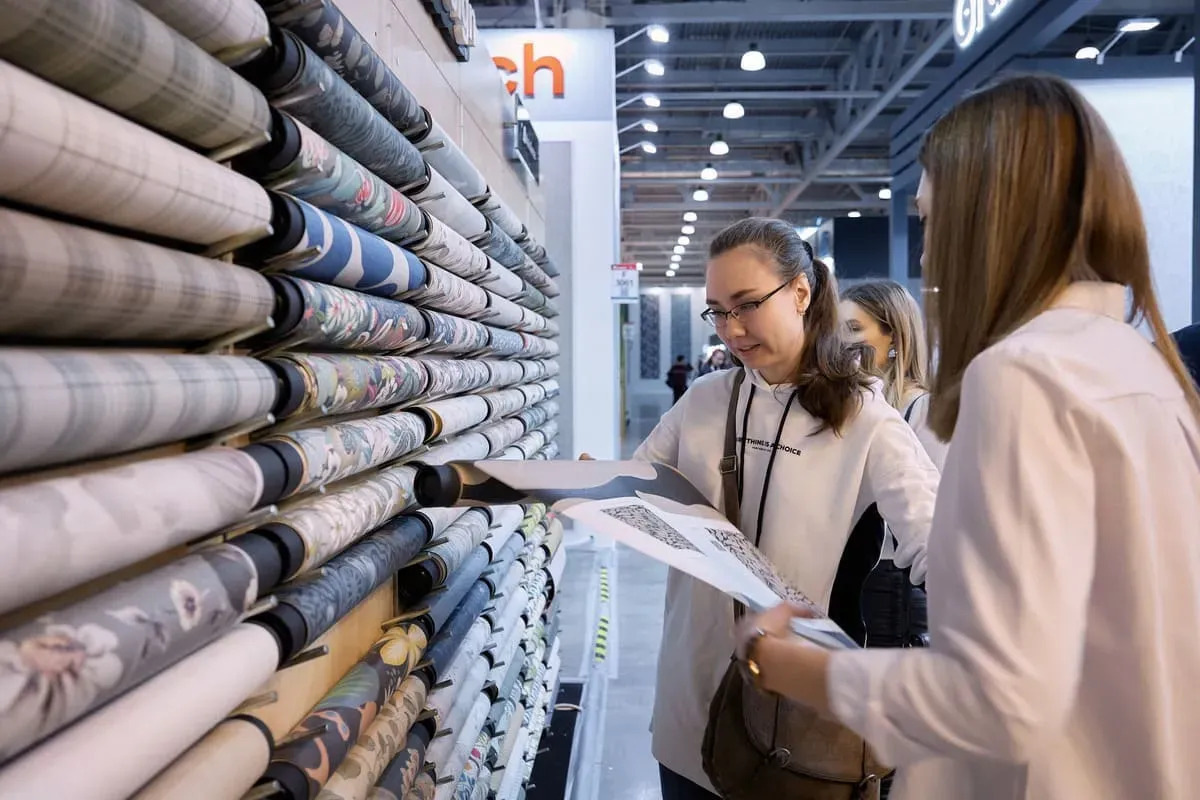
How Curtains and Textiles Can Transform Interior Spaces
Curtains and soft furnishings can shift how a room feels, sounds, and performs without moving a single wall. For architects and designers, that means faster visual impact. For procurement teams, it can mean fewer complaints post-handover. MosBuild’s 31st-anniversary edition, running from 31 March to 3 April 2026 at Crocus Expo IEC in Moscow, coincides with the time when many projects are finalising interior packages for the next build season.
Curtains Introduce Colour, Pattern, And Texture Without Structural Changes
Curtains sit at eye level, cover large areas, and are often the first soft surface people notice. That combination gives textiles disproportionate influence over perception. A neutral shell can read warmer, quieter, and more complete once the window treatment is installed.
For specifiers working across apartments, serviced living, and hospitality-style residential, the value is speed. Fabric can correct glare, soften daylight, and add depth in a single trade package. That matters when programmes are tight and client sign-off is close.
MosBuild’s interiors coverage helps teams evaluate these decisions with context. Sector sourcing is not limited to a single aisle. The event spans 17 sectors that support a full interior decision-making chain, from window décor through finishing materials and hardware.
Soft Textiles Balance Hard Surfaces In Contemporary Interior Design
Many modern interiors lean heavily on hard finishes. Glass, stone, porcelain, and painted gypsum board are durable, clean, and predictable. They can also produce spaces that feel cold and acoustically sharp.
Textiles solve that issue through material contrast. Heavier weaves, textured sheers, and lined drapes absorb light differently than hard planes. They also reduce the visual dominance of large glazing areas and high-contrast edges.
At MosBuild, this conversation is practical. The curtain and textile sector highlights demand driven by design-led residential upgrades and hospitality, including interest in automated blinds and related mechanisms.
Curtains Regulate Natural Light And Privacy Across Interior Zones
Light control is where curtains become a building-performance decision. It is not only about mood. It affects glare, screen visibility, overheating risk, and privacy lines in dense urban housing.
A useful way to frame window treatments during specification is by performance layers. Before looking at a product range, many teams align on three variables. This keeps selection focused and reduces rework later.
- Transmission control: Sheer, dim-out, blackout, and how they behave under strong daylight
- Solar management: Backing colour, lining type, and how the fabric responds to heat gain
- Privacy behaviour: Daytime vs night-time privacy and sightline control
External guidance supports why this matters. The United States Department of Energy notes that certain drapery configurations can reduce heat gains, and that drawn draperies can reduce heat loss in cold weather.
Textiles Improve Acoustic And Thermal Comfort In Residential Spaces
Complaints about noise travel fast on residential projects. Open-plan layouts, hard flooring, and tall glazing can create reverberation that occupants notice immediately.
Curtains are not a complete acoustic solution, but they do contribute. Research into the acoustic properties of blackout curtains shows measurable sound absorption and transmission effects linked to construction and fabric properties. Professionals recognise the indicators that matter: fabric mass per square metre, pleat fullness, air gap to glazing, and whether the track allows edge sealing.
Thermal comfort follows a similar logic. Lined systems and tighter side closures can reduce draughts and improve perceived warmth near windows. That matters in renovation programmes, where glazing replacement is often out of scope, yet comfort targets remain.
This is where MosBuild functions as a construction innovation exhibition in the most commercial sense. Buyers can assess how fabrics, tracks, rods, and automation work together, then apply that knowledge directly to tenders.
Fabric Selection Influences Safety, Durability, And Lifecycle Performance
For procurement teams, curtains are a compliance category. They carry safety obligations and ongoing maintenance costs.
A clear specification usually covers test evidence, cleaning requirements, and replacement planning. It also accounts for site conditions, such as shrinkage allowances, seam integrity, and colourfastness under ultraviolet (UV) exposure.
Many professionals will recognise these technical checkpoints:
- Fire behaviour evidence aligned to the project requirement, often referencing standards such as EN 13773 for curtains and drapes
- Fabric weight, weave stability, and dimensional tolerance after cleaning
- Track load ratings, runner quality, and end-stop durability under repeated cycles
- Hardware finishes suited to humidity, cleaning chemicals, and corrosion risk
MosBuild supports these conversations by concentrating suppliers in one place, with product documentation available at the stand level. That is the advantage of an international building trade show, where purchasing conversations happen face-to-face rather than only through catalogues.
Secure Your Route To Market At MosBuild 2026
MosBuild 2026 supports ongoing networking, lead capture, and industry updates between editions, helping exhibitors and buyers keep conversations active beyond the show floor. With 17 sectors and a scale that draws purchasing-led audiences, MosBuild remains a primary route for suppliers targeting Russia, the CIS, and wider Eurasia.
Exhibitors planning textile, window décor, or adjacent interior categories can submit an exhibit enquiry.