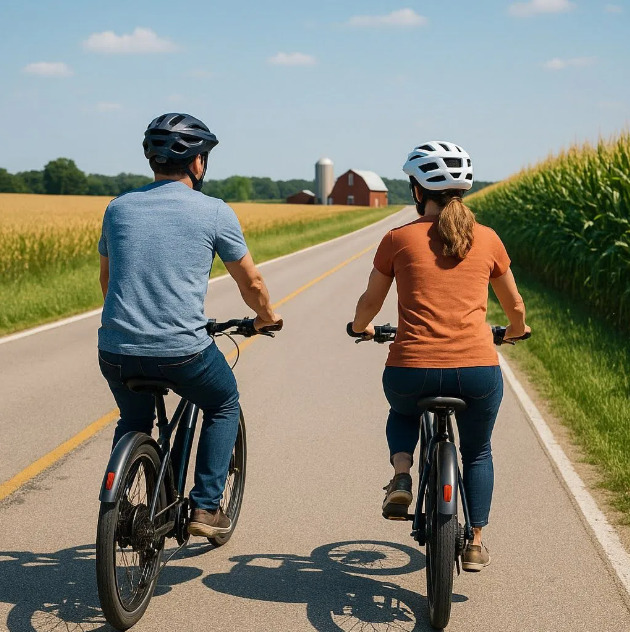
Iowa E-Bike Laws: Key Rules for Riders in 2025
The Iowa e-bike laws are designed to offer accessibility and clarity for electric bicycle riders, making the state one of the more e-bike friendly jurisdictions while still maintaining important safety standards.
Under Iowa Code § 321.235B and related legislation, a “low-speed electric bicycle” is defined as having fully operable pedals, a saddle, an electric motor of no more than 750 watts (1 hp), and speed assistance that stops when the rider stops pedaling, applies the brakes, or disengages the motor.
Iowa uses a three-class e-bike system:
Class 1 — Pedal-assist only, up to 20 mph;
Class 2 — Throttle or pedal assist, with a maximum speed of 20 mph;
Class 3 — Pedal-assist only, up to 28 mph; riders must be at least 16 years old and the bike must have a speedometer.
Importantly, in Iowa you do not need a driver’s license, registration, or insurance for legal low-speed e-bikes. Helmets are not required statewide, though strongly recommended—especially for Class 3 riders. Bike riders can typically use e-bikes on roads, bike lanes, and multi-use trails unless local ordinances restrict Class 3 bikes from certain paths.
Modifying an e-bike to exceed 750 W output or speeds beyond defined classes can reclassify it as a motor vehicle—which then triggers licensing and registration. Understanding these core provisions of Iowa’s e-bike laws helps riders stay legal, safe, and confident while enjoying electric cycling.