Optimising Commercial Laundry Services | Bundle Laundry
With Australia’s growing concern over water shortages and the calls for being more sustainable in hospitality, industrial laundry services need to find new ways to save water. Commercial laundries in particular use lot of water – a single machine can use as much as 2 gallons of water per wash. Hence, investing in new technology can reduce the amount of water consumed, cut down costs and make commercial laundry washing a more sustainable practice. With that in mind, we are going to discuss one bit of technology that could improve water conservation in commercial laundries: Tunnel washer technology.
With Australia’s growing concern over water shortages and the calls for being more sustainable in hospitality, commercial laundry services need to find new ways to save water. Hence, investing in new technology can reduce the amount of water consumed, cut down costs and make commercial laundry washing a more sustainable practice. With that in mind, we are going to discuss one bit of technology that could improve water conservation in commercial laundries: Tunnel washer technology.
How does tunnel washer technology work?
First invented in the 1960s, tunnel washer technology has evolved significantly over the years to transform its washing process to deliver excellent results, while reducing the amount of water used. We have discussed tunnel washer technology in the past, but have not explained how it works, or how it saves water in industrial laundry services.
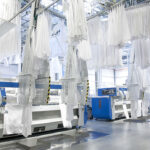
The defining feature of the tunnel washer is the long metal tube called the tunnel, where water and linen are added. Running down the centre of the metal tube is the Archimedes Screw, a long spiral screw that divides the spaces in the tunnel into different pockets or sections, though the number of sections can vary depending on the manufacturer. The screw is porous and rotatable, providing the means for linen to move through the pocket. Different models of the tunnel washer come with several extra features to help manage workloads more efficiently.
Tunnel washers work by adding linen on one end and then adding water/chemicals throughout he process. During the washing process, the linen will pass through each section created by the Archimedes screw. The screw will rotate and adjust to ‘agitate’ the linen. After a few minutes, the screw will make one complete rotation and the linen will be moved to the next section. With this process, the linen comes into contact with increasingly clean water and fresh chemicals, so that the material becomes cleaner as it moves from one end of the tunnel to the other.
Commercial laundries have to expand how they think about efficiency to prepare for the future. They would have to make operations, management and workflows more efficient so that more work can be done in less time. The right industrial laundry services and tools can improve productivity and efficiency, not just in terms of natural resources like water, but also human capital.