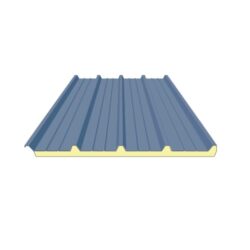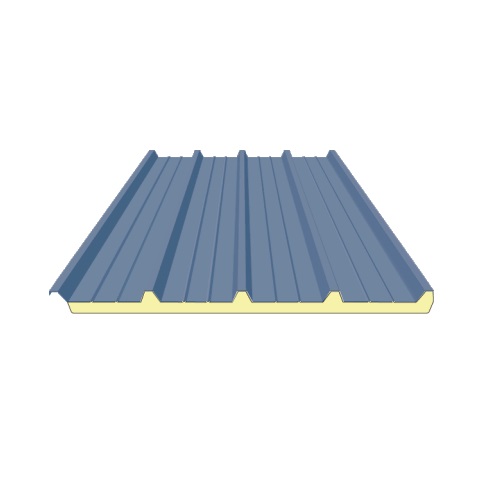
PUR PIR Sandwich Panel
PUR PIR Sandwich boards for the construction industry are divided into a variety of insulating materials for the core or panel center, including expanded polystyrene (EPS), polyurethane (PU), mineral wool, extruded polystyrene (XPS) and polyisocyanurate (PIR) and other materials, the latter has superior properties compared to other insulating cores.
In addition to factors such as insulation performance and sustainability required by the material itself, fire resistance has become an essential element of decision-making. Some of these materials can slow the spread of fire, of which PUR and PIR boards have become two kinds of insulation materials widely used in international building insulation.
One of the core materials used to manufacture PIR panels is polyisocyanurate (modified polyurethane), which stands out for its efficiency, performance and environmental considerations and is used in projects such as roofing, industrial facades and refrigerators. Due to their excellent thermal insulation and fire resistance, these have been popularized in the construction industry.
PUR/PIR Comparison
PUR
PIR
Core Material
Polyurethane
Polyisocyanurate
Face
Aluminum/Steel
Aluminum/Steel/Wood
Thickness
80mm, 100mm, 120mm, 150mm, 180mm, 200mm
Could be thinner
Performance
Small thermal conductivity, light, shock-proof, strong adaptability
Excellent thermal insulation performance, meet the world’s main fire standards
Fire-resistance
B1 CLASS
A/B1 CLASS
Application
Building insulation,
cold storage cold chain,
HVAC air duct
Industrial building,
cold storage wall,
Thermal conductivity
0.022~0.028W(m·K)
0.018~0.024W(m·K)