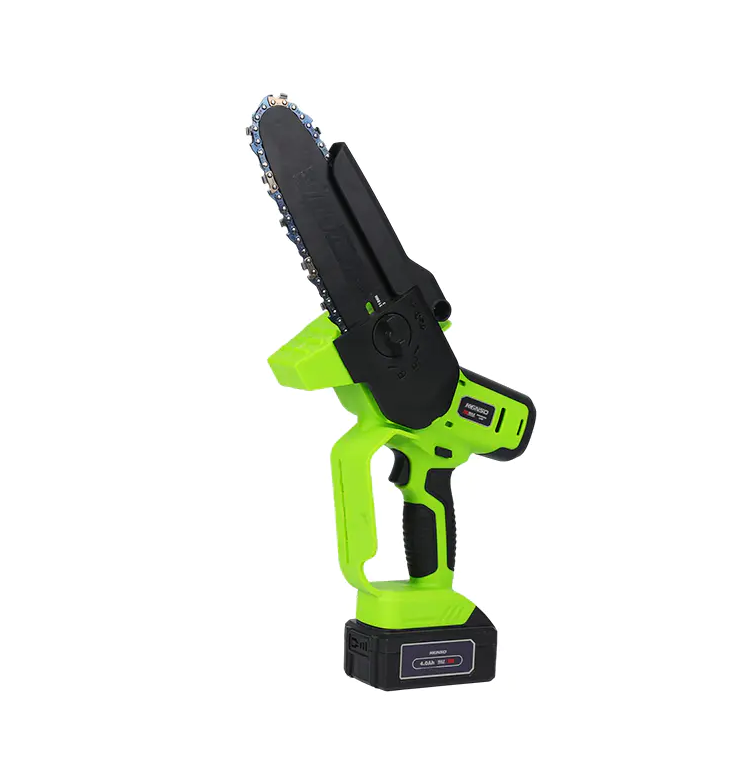
Safety Mechanisms in Brushless Mini Chainsaws
A Layered Approach to User Protection
Given the inherent risks of a chainsaw, even in a compact format, manufacturers integrate multiple safety mechanisms to prevent unintentional or accidental operation. In a brushless mini chainsaw, these features are designed to work together, ensuring the tool only runs when the user deliberately engages it under controlled conditions. Understanding these mechanisms is key to safe operation and highlights the engineering priorities behind these tools.
The Primary Safety: The Trigger Lock-Out Switch
This is the most fundamental and universal safety feature. Located within or immediately adjacent to the trigger, it is a physical barrier that must be disengaged before the trigger can be pulled. On a brushless mini chainsaw, this is typically a sliding or pivoting lever that the user must press with their thumb or finger. The sequence—first depress the lock-out, then squeeze the trigger—requires a deliberate two-handed or two-finger action that makes it very difficult to activate accidentally, such as if the tool is dropped or bumped.
Battery-Based Safety Interlocks
The brushless motor’s electronic controller adds a layer of intelligent safety. Many brushless mini chainsaw models have a system that prevents the motor from starting if:
No Chain and Bar are Installed: A sensor may detect the absence of the guide bar, disabling operation.
The Chain Brake is Engaged: If the front hand guard/chain brake is pushed forward (manually or by inertia), it physically stops the chain and also sends a signal to the controller to cut power to the motor.
This electronic integration ensures that safety-critical mechanical conditions are enforced by the tool’s “brain.”