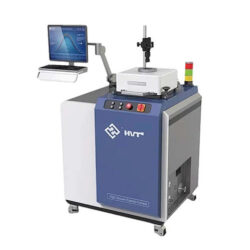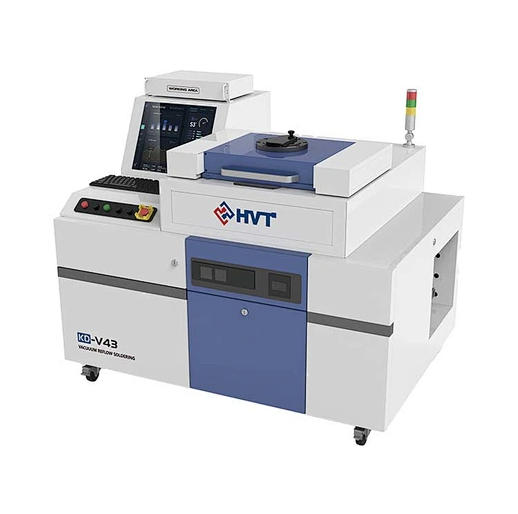
Vacuum Reflow Oven KD-V43 HVT
Model: KD-V43Welding size: 400*300MMLateral temperature difference: ±5℃Gas: Nitrogen systemControl system: Siemens PLC+IPC
Technical Parameters
Name
Vacuum Reflow Oven
Model
KD-V43
Welding size
400*300mm
Gas
Nitrogen system
Oven size (LxWxH)
1480*990*1300mm
Weight
260kgs
Low vacuum
1Pa
Height of Chamber
90mm
Max Temperature
450°C
Heating speed
Fastest can reach to 2°C /S ( Red copper heating platform)
Cooling speed
Fastest can reach to 2°C /S, Chamber with cooling water circulate
Lateral temperature difference
±5℃
Drawer loader weight
20KG
Power
Max:21.5KW, Working power:8-10KW
Heating Platform
Special treatment red copper platform
Power standard
380V, 50HZ/60HZ,3-phase five-wire,10 square copper wire
Current
3 x40 A
Control way
Siemens PLC+IPC
Detail Display
Vacuum leak detector Detector of temperature curve
Main Festures Of Vacuum Reflow Oven KD-V43 1.Void LessVoid reduction between the joining partner (<2%) to ensure better heat transfer (based on the device surface quality and the gas selection). If the void is less than 30%, the bonding strength increases. 2.Excellent temperature controlPLC and MFC architecture ensure consistency and precision temperature control, as well as reliable protection.Water Cooling system : Cross-cooling tube and water cooling tank provide rapid cooling in high-temperature environments.3.Very Short Soldering TimesThe welding cycle time is short, about 10 minutes (380-450 °C soldering temperature, cooling temperature to 45 °C, nitrogen filling, welding vacuum is below 5-10-1 Pa).4.Variation in process gasStandard : 100% nitrogen is pumped into the vacuum chamber.Option: HCOOH, ArH2 Plasma process gas, N2 & H2 forming gas.5. Good human-machine interfaceWindows provides system status queries, debugging/setting, alarms, and user interfaces.6. Advanced PLC and Safe System:The PLC system prevents accidental leaks, such as hydrogen leakage.Alarms for excessive and ultultra-highmperaturesLow pressure warning system for cooling waterProtective covers for HCOOH tanks to prevent accidental explosionsSystem for detecting leaks of hydrogen gas and formic acidAutomatic pressure relief system in case of overpressureA hydraulic pallet prevents water from damaging circuitsAutomatic hydrogen burning prevents hydrogen pollution. Applications of Vacuum Reflow Oven KD-V43
- IGBT packaging
- LED soldering (or LED soldering process)
- Solder paste process
- High-purity solder wafer process
- Laser diode packaging
- Mixed-signal integrated circuit packaging
- Casing and lid packaging
- Mems and vacuum packaging
Our Advantages
Here are some advantages of our reflow soldering machines:
- Independent research software control system, arrange the internet of things system to factory of Power module packaging ,fully cooperate with establish of customer’s MES system ,including : temperature control system, vacuum system and product process logic formulate.
- Independent research and machining vacuum chambers and valves, with rich experience for design , material choose, production process testing.
- Our technical team with rich experience from SMT to Semiconductor microchip package process ,including Product welding, welding material, device surface treatment, setting of temperature and vacuum , and others.
- Company have more than 200 workers ,Technical R&D personnel more than 40,till now with patent of invention 10, practical patents 20,1 software patent, 1 design patent , and patents in apply more than 15.
Frequently Asked Questions 1. What is reflow soldering machine? Besides assembling PCBs, reflow equipment also provides soldering capabilities in both small and large assembly areas. Depending on your rework and assembly area, you can purchase smaller reflow ovens if you solder in a small PCB assembly area. 2. What are the components of reflow? The reflow solder profile usually consists of four stages, namely preheating, thermal soak, reflow and cooling. During the preheating phase, heat is accumulated smoothly on the board and on the components. In order to prevent components from being damaged by too rapid temperature changes, a temperature gradient has to be observed. 3. What are the principles of reflow soldering? Reflow soldering is based on the role of hot air flow on solder joints, colloidal flux in a fixed high temperature airflow under the physical reaction to achieve SMD welding, with the name”reflow soldering”given to a process in which high temperatures are achieved through gas circulation in the welder during welding.