Manual, Semi-Automatic, or Automatic Shrink Wrapping: Which Level Fits?
Manual, Semi-Automatic, or Automatic Shrink Wrapping: Which Level Fits?
Introduction
Every packaging line hits the same fork in the road. You need shrink wrapping, but the choice between manual, semi-automatic, and automatic equipment feels overwhelming. Get it wrong, and you are either paying operators to do what a machine could do faster, or you have spent six figures on capacity you cannot fill.
The decision is not about which machine is “best.” It is about matching automation level to your product volume, labor costs, and packaging consistency requirements. A craft brewery hand-wrapping 200 cases a day has different needs than a tire manufacturer pushing 1,200 units per shift.
This guide breaks down the three automation levels, what each actually costs to run, and how to match them to your operation. You will learn the throughput thresholds, labor trade-offs, and film cost implications that determine which level fits your line.
Key Takeaways
- Manual wrapping suits volumes under 300 packages per day with highly variable product sizes.
- Semi-automatic L-bar sealers deliver 5–15 packages per minute with one operator.
- Fully automatic systems reach 20–40 packages per minute and pay off above roughly 50,000 packages monthly.
- Film savings from automatic machines typically run 10–15% due to tighter, more consistent seals.
- Your product’s size range matters more than speed when choosing between vertical and horizontal systems.
What You Need Before Starting
Before you compare machine specs, gather three numbers from your own operation. First, your average daily output in packages. Second, your labor cost per hour including burden. Third, the dimensional range of your products — minimum and maximum length, width, and height.
You also need to know your film type. Polyolefin (POF) film shrinks at 120–180°C and is the most common choice for retail packaging. PVC film shrinks at lower temperatures but has tighter storage restrictions. Polyethylene (PE) film is tougher and suits heavier industrial products like tires. Each film behaves differently in a shrink tunnel, and your machine choice must match the film you intend to run.
Finally, check your facility’s available floor space and electrical supply. A fully automatic side sealer with a shrink tunnel can occupy 8–12 meters of line length. Manual stations need barely 3 meters. Power requirements range from a standard 220V single-phase outlet for manual heat guns to 380V three-phase for continuous automatic lines.
Step 1 — Assess Your Volume and Labor Reality
What to Do
- Count your actual daily output over two full production weeks. Do not use your theoretical maximum — use real numbers.
- Calculate your fully loaded labor cost per hour. Include wages, benefits, and supervisory overhead.
- Time your current wrapping process. How many seconds does one operator need per package, from picking up the product to a finished shrink wrap?
Why This Matters
Manual shrink wrapping typically runs at 2–5 packages per minute per operator. That sounds slow, but for a small operation producing 200–400 packages daily, it is perfectly adequate. The equipment cost is minimal — a heat gun, a sealing bar, and a small table. You can start manual wrapping for under $500 in basic tools.
Semi-automatic machines change the math. An L-bar sealer with a shrink tunnel runs at 5–15 packages per minute with one operator feeding the machine. That same 400-package day now takes under an hour of machine time instead of two to three hours of manual work.
Fully automatic systems remove the operator from the cycle entirely. A reciprocating side sealer can hit 20–40 packages per minute, and continuous motion systems go higher. But these machines cost substantially more, and they demand consistent product flow to justify their speed.
Common Mistakes to Avoid
- Overestimating future volume: Buy for today’s volume plus 20–30% growth, not for a dream scenario that may take five years to materialize.
- Ignoring changeover time: If you run ten different product sizes daily, a fully automatic machine that takes 30 minutes per changeover may actually be slower than a semi-automatic unit with a 5-minute changeover.
- Forgetting the shrink tunnel: Many buyers budget for the sealer but forget the shrink tunnel, which is a separate piece of equipment for most systems.
Step 2 — Match Automation Level to Throughput
What to Do
- If your volume is under 300 packages per day, start with manual or semi-automatic equipment.
- If you run 300–1,500 packages per day, a semi-automatic L-bar sealer with a shrink tunnel is your sweet spot.
- If you exceed 1,500 packages daily, evaluate fully automatic systems seriously.
Why This Matters
The economics shift dramatically at these thresholds. Consider a semi-automatic L-bar sealer priced in the $3,000–$8,000 range. At 10 packages per minute, one operator can wrap 600 packages per hour. If your labor cost is $20 per hour fully loaded, that is about 3.3 cents per package in labor. Manual wrapping at 3 packages per minute would cost 11 cents per package in labor — more than three times as much.
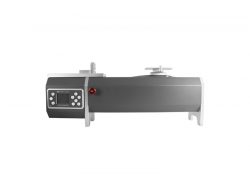
For high-volume operations, the Automatic reciprocating high-speed side-sealing shrink packa ging machine changes the equation entirely. These systems run continuously, sealing and cutting film in one motion. They handle 20–40 packages per minute without an operator feeding each item. The labor cost per package drops toward one cent or less, and the consistent seal quality reduces film waste.
Industry data from packaging equipment suppliers suggests that automatic wrapping typically saves 10–15% on film compared to manual methods. The machine pulls the film tighter and seals more consistently, which means less film per package. On a line using $50,000 of film annually, that is $5,000–$7,500 in savings — real money that offsets machine costs.
Common Mistakes to Avoid
- Buying a machine too large for your line: A high-speed automatic system running at 30% utilization wastes capital and floor space.
- Underestimating infeed requirements: Automatic machines need consistent product feeding. If your upstream process is manual, you may need a conveyor or indexing system to feed the wrapper.
- Choosing speed over flexibility: If your product dimensions change frequently, a semi-automatic machine with quick changeovers often beats a faster automatic unit that takes hours to reconfigure.
Step 3 — Consider Product Geometry and Orientation
What to Do
- Measure your product’s length, width, and height. Note which dimension is the longest.
- Determine whether your product is stable on its base or needs to be wrapped on its side.
- Check whether your product is rigid or compressible — this affects how much film tension it can handle.
Why This Matters
Product geometry determines which machine configuration works. Horizontal L-bar sealers handle flat, stable products like boxes, books, and trays. The product lies flat, the film wraps around it, and the seal bar closes across the width.
Vertical machines are different. A Fully Automatic Vertical L-Type Shrink Wrapping Machine handles tall, unstable, or oddly shaped products that cannot lie flat. Bottles, tall cans, and assembled components benefit from vertical wrapping because the product stays upright throughout the process. The film forms a bag around the product from above, and the seal bar closes underneath.
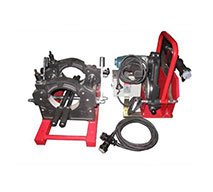
For compressible or irregular products, you need to think about film tension. A tire, for example, is round and heavy. It needs a machine with robust film handling and a tunnel that can shrink heavy-gauge PE film evenly. The Automatic Tire Heat Shrink Wrapping Machine X800+S800 is built specifically for this application, with a tunnel design that delivers consistent heat distribution around the tire’s circumference.
Common Mistakes to Avoid
- Assuming all shrink wrap machines handle all products: A machine designed for flat boxes will struggle with tall bottles, and vice versa.
- Ignoring product weight: Heavy products need stronger sealing bars and more robust conveyors. A machine rated for 5 kg items will fail quickly if you feed it 25 kg products.
- Skipping the corner-cutting step: For sharp-cornered products, film can puncture at the corners during shrinking. Corner-cutting machines remove excess film before the tunnel, preventing tears.
Step 4 — Calculate Total Cost of Ownership
What to Do
- List the purchase price of each machine option.
- Add installation, training, and any conveyor or infeed equipment needed.
- Estimate annual film consumption based on your package count and typical film usage per package.
- Calculate annual labor cost for each option based on the operator time required.
- Add estimated maintenance costs — typically 2–5% of machine price annually.
Why This Matters
Purchase price is only the beginning. A manual setup might cost $1,000 in tools but consume 15–20% more film per package than an automatic system. Over a year of 100,000 packages, that is 15,000–20,000 extra packages’ worth of film — potentially $3,000–$5,000 in waste.
Semi-automatic machines sit in the middle. They cost $5,000–$15,000 complete with a shrink tunnel. They need one operator but run at 5–15 packages per minute. Film usage is better than manual but not as tight as fully automatic.
Fully automatic systems cost $30,000–$100,000 or more, depending on speed and features. They eliminate the operator from the wrapping cycle, reduce film waste by 10–15%, and run at 20–40 packages per minute. The payback period depends on your volume, but at 50,000+ packages per month, most operations recover the investment within 18–30 months.
Common Mistakes to Avoid
- Forgetting spare parts costs: Sealing wires, Teflon tape, and heating elements wear out. Budget for these consumables.
- Ignoring energy consumption: Shrink tunnels run continuously and can draw 10–20 kW. At $0.10 per kWh and 2,000 operating hours annually, that is $2,000–$4,000 per year just in tunnel electricity.
- Skipping the warranty review: Check what the manufacturer covers and for how long. A 12-month warranty on the full machine is standard in the industry.
Step 5 — Plan for Changeovers and Flexibility
What to Do
- List all the product SKUs you run and their dimensions.
- Time how long each machine takes to change from your smallest to your largest product.
- Decide whether you need quick-change features like adjustable seal bars or motorized width adjustment.
Why This Matters
Changeover time is the hidden killer of packaging line efficiency. A machine that runs at 30 packages per minute but takes 45 minutes to change over will lose a full shift if you switch products six times daily. A semi-automatic machine with a 5-minute changeover might actually deliver more usable output.
Most semi-automatic L-bar sealers have manual width and height adjustments that take 5–10 minutes. Fully automatic machines range from manual adjustments (15–30 minutes) to servo-driven automatic positioning (under 2 minutes). The servo option adds cost but pays off in mixed-product operations.
For operations with a narrow product range — one or two SKUs — changeover speed matters less. You can buy a simpler machine and accept slower adjustments. For contract packagers or multi-SKU manufacturers, servo-controlled changeovers are worth the premium.
Common Mistakes to Avoid
- Buying a single-purpose machine for a multi-product line: If your product range is wide, prioritize changeover speed over maximum throughput.
- Ignoring film width changes: Different product sizes need different film widths. Check how long it takes to swap film rolls on each machine.
- Forgetting operator training: A complex automatic machine requires skilled operators. Factor training time into your startup plan.
Pro Tips for Success
- Run a film test before buying: Send your actual product to the manufacturer and ask for a sample wrap. This reveals film tension issues and tunnel temperature problems before you commit capital.
- Buy the shrink tunnel and sealer as a matched pair: Mismatched components cause sealing and shrinking inconsistencies. Manufacturers like ZF Shrink design their tunnels to match their sealers’ output.
- Consider a corner-cutting machine for sharp products: If your products have corners that puncture film, an automatic corner cutter removes the excess film before shrinking, eliminating tears and reducing film waste.
- Negotiate spare parts in the initial purchase: Sealing wires and heating elements are consumables. Ask for a starter kit of spares with your machine order.
- Plan for future volume growth: If you expect to double output within two years, buy a machine rated for 150% of your current volume rather than exactly your current needs.
Frequently Asked Questions
What is the difference between manual and semi-automatic shrink wrapping?
Manual wrapping uses a heat gun and handheld sealing tools, with the operator doing every step by hand. Semi-automatic machines use an L-bar sealer to seal and cut the film automatically while the operator feeds products manually. Semi-automatic runs at 5–15 packages per minute versus 2–5 for manual, with better seal consistency.
How many packages per minute can an automatic shrink wrapping machine handle?
Fully automatic reciprocating side sealers typically run 20–40 packages per minute. Continuous-motion systems can exceed that, but the practical limit depends on product size and infeed consistency. For reference, a standard automatic L-bar sealer with a tunnel handles 15–25 packages per minute in typical production conditions.
What film thickness should I use for shrink wrapping?
Polyolefin film for retail packaging typically ranges from 15–25 microns. Heavier products or those with sharp edges need 30–50 micron film. PE film for industrial applications like tires runs 50–100 microns. Your machine’s sealing system must be capable of handling the film thickness you choose.
How much does a shrink wrapping machine cost?
Manual tools cost under $500. Semi-automatic L-bar sealers with tunnels range from $3,000–$15,000. Fully automatic systems start around $30,000 and can exceed $100,000 for high-speed continuous machines with servo controls and automatic changeovers.
Do I need a shrink tunnel, or can I use a heat gun?
A heat gun works for low volumes and occasional wrapping, but it produces inconsistent results and takes 3–5 times longer per package. A shrink tunnel provides even heat distribution and consistent shrinkage. For any production volume above 100 packages per day, a tunnel is worth the investment.
Conclusion
Manual, semi-automatic, or automatic shrink wrapping — the right level fits your volume, product geometry, and labor costs, not the machine’s maximum speed. Start by measuring your real output and labor burden. Match the automation level to your throughput, not your aspirations. And never forget that product shape determines machine configuration as much as speed does.
For low volumes under 300 packages daily, manual tools are perfectly adequate. Semi-automatic L-bar sealers serve most operations up to 1,500 packages per day with one operator and reasonable film efficiency. Fully automatic systems earn their keep above that volume, especially when film savings and labor elimination are factored in.
The smartest move is to test your actual product on the machine you are considering. Send samples to the manufacturer, run a trial, and measure the film usage per package. That data will tell you more than any spec sheet about which level fits your operation. When you are ready to compare options, look at machines designed for your specific product type — whether that is a reciprocating side sealer for high-speed lines, a vertical L-type sealer for tall products, or a dedicated tire wrapping system for heavy industrial goods.