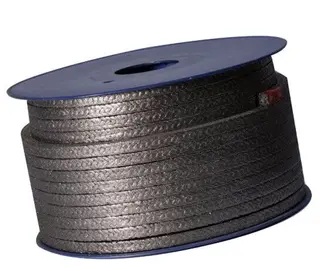
Expanded Graphite Packing: Ideal Choice for Valve Sealing
In industrial applications, the selection of sealing materials plays a vital role in ensuring the stable operation of equipment. Among these materials, Graphite Packing—also known as flexible graphite packing—has become a preferred choice for many enterprises due to its distinctive performance characteristics and wide applicability. This article provides an in-depth exploration of its properties, advantages, disadvantages, application areas, and best practices for installation and maintenance.
Properties of Expanded Graphite Packing
Expanded graphite packing is manufactured by braiding flexible graphite yarns. It combines the outstanding chemical stability of natural flake graphite with enhanced mechanical properties. Produced by chemically treating and rapidly expanding high-purity flake graphite at high temperatures, this material exhibits several notable features.
It has low density and high plasticity, with a bulk density of just 0.002–0.005 g/cm³ and a product density ranging from 0.8–1.8 g/cm³. This makes it lightweight, formable, and suitable for producing sealing components of varied shapes. Its high purity, often reaching 98–99% fixed carbon content, meets stringent sealing demands in nuclear and aerospace industries.
Expanded graphite performs across a wide temperature range, from -200°C to 800°C in sealing applications, maintaining flexibility at low temperatures and resisting softening or decomposition at high temperatures. It offers excellent chemical corrosion resistance, standing up to most media except strong oxidants under extreme conditions. Its thermal conductivity and low thermal expansion coefficient align well with typical sealing materials, ensuring performance stability during thermal fluctuations.
The material also provides radiation resistance, low permeability, and self-lubrication due to its layered hexagonal structure, minimizing wear on shafts and stems. Furthermore, it is easy to process, allowing cutting, winding, and bending with ordinary tools. Owing to these combined features, expanded graphite packing is a highly versatile sealing solution across numerous industrial sectors.
Advantages of Expanded Graphite Packing
Expanded graphite packing stands out among sealing materials for its superior self-lubrication and heat dissipation capabilities. These properties minimize frictional wear on shafts, extend equipment life, and prevent localized overheating. Its low friction coefficient enhances sealing reliability across diverse applications.
The material’s softness coupled with high strength allows it to adapt to complex shapes while withstanding considerable mechanical stress. Its customizability is another advantage—by reinforcing it with carbon fiber, copper wire, stainless steel (304, 316L), or Inconel wire, users can tailor the packing for high-temperature and corrosion-resistant applications. The combination of adaptability and protection makes it particularly effective in safeguarding shaft integrity and ensuring consistent sealing performance.
Disadvantages of Expanded Graphite Packing
Despite its benefits, expanded graphite packing has limitations. Its sealing performance can vary under extreme temperature and pressure conditions, making it sensitive to operational environments. It also has a shorter service life compared to some alternatives, as it can experience wear and aging, especially in harsh conditions, leading to more frequent maintenance.
Furthermore, installation and maintenance require care and expertise. Incorrect installation may result in uneven compression or leakage, while improper handling can damage the packing. In high-temperature or high-pressure systems, these challenges become even more critical, underscoring the need for professional installation practices.
Applications of Expanded Graphite Packing
Thanks to its superior performance, expanded graphite packing is widely used in the petroleum, chemical, power generation, and pharmaceutical industries. It serves as a reliable sealing solution for both static and dynamic applications in valves, pumps, and pipeline joints. Whether handling high-temperature steam or corrosive chemicals, it provides durable and leak-free operation, ensuring equipment safety and efficiency.
Installation and Maintenance Guidelines
The effectiveness of expanded graphite packing largely depends on proper installation and maintenance. Incorrect procedures can compromise sealing quality and shorten service life.
-
Preparation Before Installation:Remove old packing carefully using a packing extractor and clean the stuffing box thoroughly. Inspect shafts or rods for damage, corrosion, or wear, and replace any defective parts. Analyze the cause of previous packing failure and record precise measurements of the stuffing box and shaft components.
-
Selection of Suitable Packing:Choose the correct cross-section size and number of rings based on equipment specifications. Ensure the material matches the system’s temperature, pressure, and medium conditions.
-
Installation Procedure:Use appropriate tools and lubricants. Install each ring one by one, staggering the joints by 90° to 120° to prevent leakage paths. Compress each layer evenly before installing the next.
-
Post-Installation Adjustment:After assembly, start the system gradually. Allow slight leakage during the initial run-in, then tighten the gland evenly until optimal sealing is achieved. Avoid over-compression, which may damage the packing.
-
Maintenance:Inspect regularly for leakage, temperature rise, or excessive wear. Replace the packing periodically to maintain sealing performance and extend equipment life.
Conclusion
Expanded graphite packing combines chemical stability, high-temperature resistance, and self-lubrication, making it an essential material for industrial sealing. When properly installed and maintained, it provides reliable, long-term performance across a variety of demanding applications, ensuring the safety and efficiency of critical equipment.
It’s important to know about Google SEO to help your website rank higher in search results.


