Packing Seals: Principles, Advantages & Leakage Mechanisms
In modern industry, the reliable operation of mechanical equipment depends heavily on effective sealing technologies. Among them, Packing Seals remain one of the most enduring and versatile sealing methods. This article explores their working principles, advantages, leakage mechanisms, and how technological advancements continue to improve their performance and reliability.
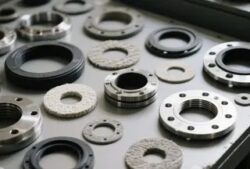
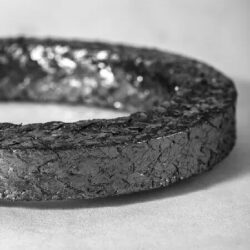
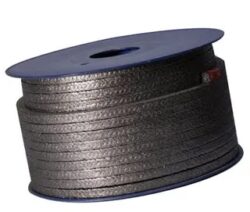
What Are Packing Seals?Packing seals are one of the earliest sealing solutions, developed centuries ago and still widely used today. Their simple structure, easy installation, and convenient maintenance make them suitable for sealing rotating, reciprocating, and slow spiral motion shafts (such as valve stems). While mechanical seals have largely replaced packing seals in certain rotary machinery like centrifugal pumps, packing seals remain indispensable in applications involving high temperatures, strong corrosion, or fluids with solid particles.
Working Principles of Packing SealsUnderstanding how packing seals work is key to optimizing their use and improving operational performance.
-
Basic Sealing FunctionThe main role of a packing seal is to prevent fluid leakage. When the leakage rate exceeds acceptable limits, sealing failure occurs. Unlike mechanical seals, packing seals generally fail gradually rather than catastrophically, which allows for timely maintenance and adjustment.
-
Causes of Seal FailureThe degradation of packing seals often stems from changes in packing volume or gland pressure. Factors such as lubricant loss, fiber shrinkage, wear, corrosion, and thermal decomposition can cause packing volume reduction, while shaft wear can increase gland clearance. Extending the time before these changes occur is a central goal in packing seal research and development.
-
Forces and Leakage ChannelsSeal leakage occurs due to pressure or concentration differences between two sides of the seal, or due to relative motion along the leakage path. Leakage paths form when the flow resistance is insufficiently high. Minimizing these pathways—or increasing resistance—is crucial for maintaining a tight seal.
Key Advantages of Packing SealsDespite their age, packing seals maintain a vital role in modern sealing systems due to several inherent advantages:
-
Long-Term StabilityPacking seals provide reliable long-term operation when properly lubricated. A small amount of controlled leakage is often allowed to maintain lubrication, minimizing wear and friction losses. Impregnating the packing with lubricants or enhancing its self-lubricating properties ensures better performance and durability.
-
Flexibility and ResilienceSoft packing seals rely on the elasticity of their materials. When compressed axially, they expand radially to block leakage channels. This adaptability allows the packing to fill surface irregularities and maintain sealing performance despite vibration, wear, or minor shaft misalignments.
-
Reduced Adhesion and Dynamic LeakageReducing surface roughness and controlling the orientation of spiral marks on rotating shafts can significantly minimize dynamic leakage. The direction of these marks should ideally oppose fluid flow to limit leakage rates.
Leakage Mechanisms of Packing SealsAlthough packing seals are reliable, leakage control remains a critical design consideration. Understanding how leakage occurs helps engineers design and maintain more effective seals.
-
Bearing and Labyrinth EffectsTwo main theories explain packing seal performance—the bearing effect and the labyrinth effect. The bearing effect occurs when lubricant squeezed from the packing forms a thin film between contact surfaces, creating a low-friction boundary similar to a sliding bearing. The labyrinth effect arises from small cavities and grooves that create a complex path, effectively reducing fluid flow and leakage.
-
Leakage PathwaysLeakage can occur through three primary routes:
-
The interface between the packing and the stationary component
-
The packing material itself
-
The interface between the packing and the moving component
For most liquid media, leakage mainly occurs along the moving component interface. Gaseous or highly permeable fluids, however, may also leak through the packing structure.
-
Forms of Leakage MechanismsSpecific leakage types include clearance leakage (through visible gaps), porous leakage (through microchannels in rough surfaces), adhesion leakage (in reciprocating motion), and dynamic leakage (in rotary motion). Each form highlights the importance of precision surface finishing and material integrity in sealing performance.
ConclusionPacking seals combine simplicity, adaptability, and efficiency, securing their place as an essential sealing technology even in the era of advanced mechanical seals. Their performance in challenging environments—such as high temperature, corrosive, or particulate-laden systems—remains unmatched. Nevertheless, continuous innovation in materials and design is essential to minimize leakage, extend service life, and ensure safe, reliable operation in modern industrial systems.
It’s important to know about Google SEO to help your website rank higher in search results.