Selection of Packing Materials: A Practical Guide
Packing Material Selection: Ensuring Reliable Sealing and Performance
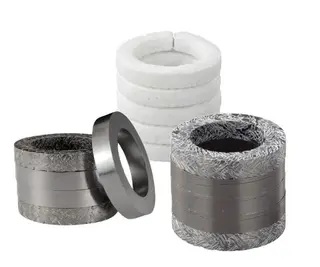
In industrial production, selecting the right packing material is a critical step. Packing is widely used in valves, pumps, and other equipment to provide sealing and prevent leakage. Proper material choice not only enhances equipment performance and reliability but also extends service life and reduces maintenance costs. This guide explores the key factors and considerations for selecting packing materials, helping engineers make informed decisions for diverse industrial applications.
Fundamental Requirements for Packing Materials
Before selecting packing materials, it is essential to understand the core criteria they must meet to function reliably under complex working conditions:
Heat ResistancePacking must withstand high temperatures without degradation. Heat resistance is typically evaluated through heat loss measurements; lower heat loss indicates better stability. For example, in chemical reactors reaching several hundred degrees Celsius, poorly heat-resistant packing may fail, causing leaks or safety hazards.
Corrosion ResistancePacking comes into contact with various media, some highly corrosive. Excellent corrosion resistance prevents degradation, maintains sealing integrity, and avoids contamination of the medium, which is especially critical for chemical processing.
Elasticity and CompressibilityEffective packing deforms under pressure to fill gaps and returns to its original shape when pressure is released. Minimal permanent deformation ensures long-term sealing performance, particularly important for valve stems or reciprocating equipment.
TightnessTightness ensures the packing forms a reliable seal under compression. High-quality packing maintains stability under high-pressure and high-temperature conditions, preventing leaks that could compromise safety or product quality.
Low Friction and Wear ResistancePacking materials often move relative to sealing surfaces (valve stems, pump shafts). Low friction reduces wear and heat generation, while high wear resistance prolongs service life and reduces maintenance frequency.
Chemical StabilityPacking must remain chemically inert with both the working medium and adjacent metal surfaces. This is crucial in food processing, pharmaceuticals, and other sensitive applications to prevent contamination.
Environmental FriendlinessSustainable packing materials reduce environmental impact and align with eco-friendly industrial practices. Modern packings may utilize renewable resources and minimize reliance on petroleum-based products.
Key Considerations in Packing Material Selection
Beyond fundamental properties, selection should account for specific operational factors:
Equipment Type and Motion ModePacking must suit the equipment’s motion: valve stem packing typically endures reciprocating motion, while pump shaft packing experiences rotary motion. Material choice should ensure sealing under the relevant movement type.
Medium CharacteristicsConsider the medium’s state (gas or liquid), viscosity, corrosiveness, and permeability. High-viscosity liquids need packing with good lubrication, while corrosive gases require enhanced corrosion resistance. Highly permeable media may demand tighter sealing solutions.
Operating Temperature and PressurePacking must remain stable under expected temperature and pressure ranges. High-temperature and high-pressure steam pipelines, for example, require materials capable of resisting both extremes.
Linear VelocityHigher relative speeds between packing and sealed surfaces (e.g., fast-rotating pump shafts) necessitate materials with excellent wear resistance and low friction to minimize heat and abrasion.
Abrasive Solid ParticlesMedia containing abrasive solids accelerate wear. Packing with reinforced wear resistance or structural optimization is needed to maintain sealing performance.
pH ValueAcidic or alkaline media impose strong corrosive effects. Packing must be chemically resistant to ensure long-term stability.
Common Packing Material Types and Applications
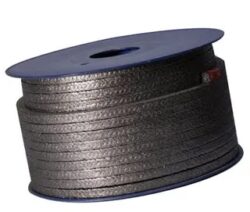
Graphite Packing
-
Properties: Excellent heat and corrosion resistance, low friction.
-
Applications: High-temperature, high-pressure, and corrosive media in chemical, petroleum, and power industries.
-
Limitation: Relatively low elasticity.
PTFE (Polytetrafluoroethylene) Packing
-
Properties: Superior chemical stability, low friction, good heat resistance.
-
Applications: Acids, alkalis, and organic solvents; widely used in food, pharmaceutical, and electronics industries.
-
Limitation: Lower wear resistance against abrasive media.
Carbon Fiber Packing
-
Properties: High strength, wear resistance, elasticity, and corrosion resistance.
-
Applications: High-speed rotating equipment such as pump and agitator shafts.
-
Limitation: Higher cost.
Rubber Packing
-
Properties: Excellent elasticity, moderate pressure and temperature resistance, good wear properties.
-
Applications: Water, air, and mildly acidic media; material selection depends on medium (e.g., nitrile, neoprene).
-
Limitation: Limited heat and corrosion resistance.
Metal Packing
-
Properties: High strength, heat and corrosion resistance.
-
Applications: Extreme conditions in petrochemical, aerospace, and other high-demand industries.
-
Limitation: Poor elasticity.
Conclusion
Selecting the right packing material requires careful consideration of equipment type, medium characteristics, operating conditions, motion mode, linear velocity, abrasives, and pH. A well-chosen packing material ensures effective sealing, extends equipment life, reduces maintenance, and maintains safe, reliable production.
Understanding these technical essentials allows engineers and operators to optimize packing selection for both performance and operational efficiency in diverse industrial environments.
It’s important to know about Google SEO to help your website rank higher in search results.