Packing Ring Performance Test Report
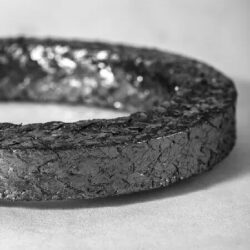
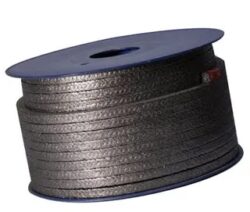
The Product Performance Test Report (Report Number: 17QX909, No. 20180129002) details the evaluation of flexible Graphite Packing rings produced by Zhejiang Magpie Sealing Co., Ltd. The products tested included three types of graphite packing: ordinary graphite (sample number 18010633-2), nuclear-grade graphite (18010632-4), and high-temperature resistant graphite (18010994-6), each with a specification of φ30φ468. Three sets were tested, with two pieces per set. The products were submitted for inspection on January 11, 2017, and the tests were conducted across several periods: from January 11 to 12, January 15 to 19, 2017, and from January 22 to 26, 2018.
The main test item was the corrosion of metal materials when equipped with different grades of graphite packing rings under the same temperature and humidity conditions. The test was conducted following the JB/T 9143-1999 standard, “Method for Corrosion Test of Anti-corrosive Asbestos Packing,” using a high and low temperature chamber. The valve stems used in testing were made of 45# steel. The graphite materials tested were coded as 9104 for ordinary graphite, 9204 for nuclear-grade graphite, and 9404 for high-temperature resistant graphite.
The raw material specifications for the graphite indicated notable differences among the three grades. Ordinary graphite had a total sulfur content of ≤1200 mg/kg, free chlorine content ≤80 mg/kg, thermal loss at 450℃ of ≤1.0%, and a minimum tensile strength of 4 MPa. Nuclear-grade graphite and high-temperature resistant graphite exhibited significantly lower sulfur and halogen content, superior thermal stability, and higher tensile strength (≥4.5 MPa). Thermal losses at elevated temperatures were also considerably lower for high-temperature resistant graphite, indicating its suitability for extreme conditions.
During the corrosion tests, the appearance of the packing before and after testing was carefully observed. Ordinary graphite (18010633-2) showed pitting at the packing contact area, indicating noticeable corrosion. Nuclear-grade graphite (18010632-4) maintained its original brightness, showing excellent corrosion resistance. High-temperature resistant graphite (18010994-6) lost luster in less than one-third of the contact area, demonstrating moderate performance between the other two grades.
The test results were assessed using a grading standard from JB/T 9143-1999: Grade 1 indicates maintained original brightness, Grade 2 represents less than one-third of the contact area losing luster, Grade 3 indicates pitting observed at the contact area, and Grade 4 represents severe corrosion. Based on these criteria, the nuclear-grade graphite was classified as Grade 1, the high-temperature resistant graphite as Grade 2, and ordinary graphite as Grade 3.
In conclusion, the performance evaluation highlights the superior corrosion resistance of nuclear-grade graphite, the moderate performance of high-temperature resistant graphite, and the relatively lower corrosion resistance of ordinary graphite. These results provide valuable guidance for selecting appropriate graphite packing materials depending on specific operational requirements and environmental conditions.
It’s important to know about Google SEO to help your website rank higher in search results.