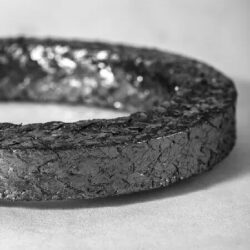
A Guide to Graphite Packing: Types, Performance & Applications
How to Choose the Right Valve Gasket in Industrial Applications
In the industrial sector, the selection of valve gaskets is crucial for ensuring the safe operation of equipment and achieving effective sealing. A suitable gasket can effectively prevent leaks and ensure the smooth progress of production processes. So, how can we correctly choose the appropriate valve gasket based on the working conditions? This article provides a detailed introduction to the key factors and steps in gasket selection, helping you make the right choice in practical work.
Key Factors in Gasket Selection
Selecting the right gasket is essential for achieving effective sealing. During the selection process, multiple factors need to be considered comprehensively, including temperature, medium, pressure, flanges, and bolts. These factors interact with each other and collectively determine the performance and applicability of the gasket.
1. TemperatureDifferent gasket materials perform differently at various temperatures. When system temperature approaches the maximum tolerance of a gasket material, a higher-grade material should be chosen. If the system temperature exceeds the gasket’s limits, sealing performance may fail.
2. MediumThe type of fluid in the pipeline influences gasket selection. Materials like EPDM resist strong acids, bases, and salts but are unsuitable for oils and hydrocarbons. PTFE resists most chemicals but not free fluorine or alkali metals. Choosing a chemically compatible gasket prevents corrosion and leakage.
3. PressureEach gasket has a maximum pressure rating. Exceeding this can cause extrusion, deformation, or rupture. Temperature and pressure are interrelated; higher temperatures reduce material strength and pressure tolerance.
4. Flanges and BoltsThe type, number, and grade of bolts, along with the flange surface, affect the effective gasket sealing pressure. Proper bolt tightening ensures optimal gasket performance.
5. Other FactorsFlange machining quality, bolt engagement, flange rotation, medium additives, and surface treatments also affect sealing. All factors must be considered for optimal gasket performance.
Steps in Gasket Selection
After understanding key factors, follow these steps:
-
Determine the Standard – Match the flange standard, e.g., GB, JB/T, HG, or ISO.
-
Determine Nominal Diameter and Pressure – The gasket must match the flange specifications.
-
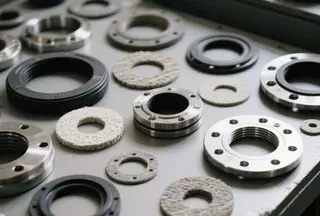
Determine Gasket Category – Choose from flexible graphite, PTFE, rubber, non-asbestos fiber, wound gaskets, or other specialized forms.
-
Determine Form – Select from non-metallic soft, wound, metal composite, or solid metal gaskets.
-
Determine Material and Model – Choose a material based on temperature, pressure, and chemical compatibility, then select the model considering form, diameter, pressure, standard, and manufacturer.
Common Gasket Materials and Properties
Metallic Gaskets: Hastelloy C-276, Inconel 600, and Monel 400 offer excellent corrosion resistance and high-temperature performance.
Non-Metallic Gaskets:
-
EPDM: Resistant to acids, bases, and salts, -57°C to 176°C.
-
Graphite Gaskets: Excellent corrosion resistance and high-temperature performance; also used for packing and wound tapes.
-
Ceramic Fiber: Suitable for high-temperature, low-pressure applications, up to 1093°C.
-
PTFE: Temperature range -95°C to 232°C; excellent chemical resistance.
Conclusion
Selecting the right valve gasket requires comprehensive consideration of temperature, medium, pressure, flanges, and bolts. By following the steps to determine standards, diameter, pressure, category, form, material, and model, the gasket will perform optimally, prevent leaks, and ensure safe equipment operation. This guide aims to help you make the right choice in practical industrial applications.Find Top China Manufacturers, Suppliers, Exporters, Services Providers, Sourcing China Quality Products & Services on the B2B E-Commerce Website Platform Portal.