What’s the Difference Between the Regular Standard Gasket and Nuclear Gaskets
Understanding the Difference Between Standard Gaskets and Nuclear Gaskets
Gaskets are essential components in pipelines, flanges, valves, and other industrial machinery. Their primary purpose is to provide a leak-tight seal between two or more mating surfaces. Gaskets come in a variety of types, sizes, and materials depending on the application requirements. Among these, nuclear gaskets are a specialized category designed for use in nuclear power plants. This article explores the differences between regular standard gaskets and nuclear gaskets.
Regular Standard Gaskets
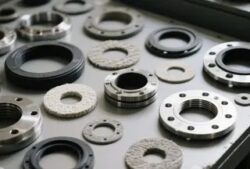
Regular standard gaskets are general-purpose sealing solutions commonly used in non-critical applications. They are typically made from materials such as rubber, cork, or compressed asbestos. The main function of standard gaskets is to prevent fluid leakage between mating surfaces. They are widely used in industries such as automotive, construction, and manufacturing.
Key characteristics of standard gaskets include:
-
Suitable for low to moderate pressures and temperatures.
-
Not intended for high-reliability or safety-critical applications.
-
Materials include rubber, cork, or compressed asbestos.
-
Often compliant with ASME B16.20 standards.
-
Cost-effective and readily available for general-purpose applications.
While standard gaskets are practical for everyday sealing needs, they are not designed to withstand extreme temperatures, high pressures, or corrosive environments.
Nuclear Gaskets
Nuclear gaskets are specifically engineered for critical applications in nuclear power plants, where safety and reliability are of utmost importance. These gaskets must provide an absolute seal to prevent the release of radioactive materials and withstand high temperatures, pressures, and corrosive environments.
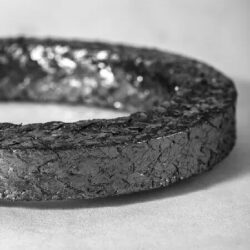
Nuclear gaskets are made from high-performance materials such as graphite, metals, or ceramics, which offer excellent thermal and chemical resistance. Their design and manufacturing are tightly controlled and subject to rigorous testing and certification standards.
Common types of nuclear gaskets include:
-
Spiral Wound Gaskets – Constructed by winding a metal strip with a filler material, usually graphite, in a spiral pattern. They maintain excellent sealing under high temperatures and pressures.
-
Metal Jacketed Gaskets – Comprise a soft filler material (graphite or PTFE) encased in a metal jacket, ideal for high-pressure, high-temperature environments.
-
Camprofile Gaskets – Feature a serrated metal core with a soft filler material, offering robust sealing performance for critical applications.
Key DifferencesFeatureStandard GasketsNuclear GasketsApplicationNon-criticalSafety-critical, nuclear plantsMaterialsRubber, cork, compressed asbestosGraphite, metal, ceramicPressure & Temperature ResistanceLow to moderateHigh, extreme conditionsReliability & SafetyGeneral-purposeHigh, regulated, certifiedCostRelatively lowHigher due to materials and certificationConclusion
The primary difference between regular standard gaskets and nuclear gaskets lies in their application, design, and performance requirements. Standard gaskets are suitable for non-critical applications, offering affordability and general sealing capability. Nuclear gaskets, on the other hand, are designed for high-stakes environments like nuclear power plants, where safety, reliability, and compliance with rigorous standards are essential.
By understanding the distinctions between these two types of gaskets, engineers and operators can make informed decisions to ensure safety, efficiency, and long-term reliability in their systems.